Commercial Moves in Soho
Trusted Help for Businesses Moving in a Busy Central London District

Commercial moves in Soho need careful planning, local knowledge, and a practical approach that fits around one of London’s most active business areas. Whether you are relocating a small office, shifting a retail unit, moving a creative studio, or reorganising part of a hospitality venue, the process is rarely as simple as loading a van and driving away. Soho’s streets are narrow, access can be limited, loading space is often restricted, and surrounding roads can be busy from early morning until late at night. That means businesses need a removal team that understands the area and can work efficiently without disrupting operations more than necessary.
Soho is known for its mix of independent businesses, media companies, restaurants, theatres, bars, shops, production spaces, and office floors tucked above street level. A move here often involves more than furniture alone. It may include fragile IT equipment, stock, display units, archives, specialist appliances, lighting, sound gear, branded materials, and confidential documents. A well-organised commercial removals service can make all the difference by handling each part of the move in a structured, careful way.
If you are planning a business relocation in Soho, near Oxford Street, Dean Street, Wardour Street, Frith Street, Greek Street, or the surrounding West End, the most useful service is one that adapts to your site, your timetable, and the way your business actually operates. Request a free quote when you are ready, and make sure the mover you choose can support your schedule, your building access needs, and your specific type of commercial property.
Why Businesses in Soho Need a Specialist Moving Service

Moving in Soho is very different from moving in a standard business park or suburban office estate. The area has a dense layout, historic buildings, mixed-use premises, and a constant flow of pedestrians, deliveries, taxis, service vehicles, and night-time activity. This creates challenges that affect every stage of a move. A commercial removal team with local experience can plan around those conditions, reducing delays and helping you avoid unnecessary stress on moving day.
Many Soho properties are located in converted buildings, upper floors, basement units, or compact spaces with awkward staircases and limited lift access. Some businesses occupy shared buildings, where timing, noise control, and coordination with landlords or building managers are essential. Others operate from customer-facing premises, where the move must be timed carefully to minimise downtime and keep front-of-house areas presentable. A local removals team can manage these practical issues with much more confidence than a service with no real understanding of central London conditions.
There is also the question of continuity. For many Soho businesses, even one lost day can be costly. Restaurants need equipment moved safely and quickly. Retailers may have stock that must be packed by category and delivered in order. Offices need computers, desks, and files relocated with minimal interruption. Production and creative businesses may need delicate handling for specialist equipment. The best removal service is one that helps you stay organised, protects your assets, and keeps the move under control from start to finish.
Common reasons local companies move
- Expanding into a larger office or studio space
- Reducing overheads by moving to a more suitable property
- Relocating a shop, café, or hospitality unit
- Reconfiguring internal workspaces during refurbishment
- Moving archive material, files, or stock into storage
- Transferring equipment between branches or sites
What Commercial Moves in Soho Can Include

Commercial moves in Soho can vary widely depending on the type of business involved. A good moving company will not treat every job the same. Instead, they will plan around the layout of the premises, the volume and type of items, and the timing required. This is especially important in Soho, where a business may be occupying only part of a building, or where access needs to be shared with other tenants, residents, or hospitality operators.
Typical items moved in a Soho business relocation may include desks, chairs, meeting room furniture, filing cabinets, shelving, retail stock, product displays, office technology, monitors, printers, point-of-sale equipment, kitchen equipment, small appliances, promotional materials, archives, and packaged personal items. In some cases, the move also involves dismantling and reassembling furniture, protecting fragile items with specialist packing materials, and arranging items so they can be unloaded in the correct order at the new site.
Some businesses need support with a full relocation, while others only need help with part of the process. For example, a company may want assistance moving one floor of an office, transferring a boutique’s stockroom contents, or relocating workstations during a phased refurbishment. That flexibility is important because not every Soho business can close completely while it moves. A reliable team will work around your operational needs where possible and keep communication clear throughout.
Services often included
- Pre-move planning and site assessment
- Packing and labelled organisation of items
- Furniture dismantling and reassembly
- Safe handling of IT and office equipment
- Transport for stock, files, and workplace contents
- Loading and unloading with attention to access limits
- Placement of items in designated areas at the destination
Planning a Smooth Move Around Soho’s Streets and Buildings
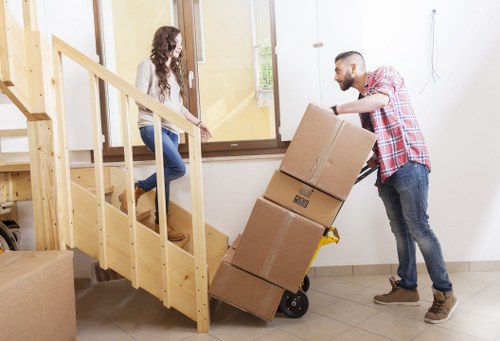
Planning is the part that saves the most time on moving day. Soho’s street pattern can make logistics more difficult than many businesses expect, particularly where vehicles must wait for loading access, stairs are tight, or the property has multiple entry points. If you are arranging a commercial relocation in Soho, the earlier you start preparing, the better your chances of a smooth and efficient move.
A local team can help you think through practical details that matter in this area. For example, they may need to work around limited loading windows, restricted stopping points, building access requirements, or busy surrounding roads. They may also need to coordinate the timing of lifts, carry routes, and delivery periods so that items can be moved without causing avoidable disruption to neighbours or customers. This is where experience in central London becomes especially valuable.
Soho has a high concentration of mixed-use properties, which means business spaces are often close to residential flats, hotel entrances, entertainment venues, and restaurants. That can affect noise, timing, and movement patterns. A careful moving plan should include loading strategy, item sequencing, protection for floors and doorways, and clear labelling so that boxes and furniture go directly where they belong at the new location. Good planning is not an extra; it is a key part of keeping the move efficient.
Preparation checklist for businesses
- Confirm your move date and preferred time window early.
- Notify building management, landlords, or neighbouring occupiers if needed.
- Sort items into keep, store, move, and dispose categories.
- Back up important digital information before disconnecting equipment.
- Label boxes clearly by department, floor, or room.
- Set aside essential items for first-day use at the new site.
- Measure access points, stairs, lifts, and large furniture items in advance.
- Arrange parking or loading permissions where required.
Taking time to prepare also helps reduce the risk of last-minute confusion. A move that starts with a clear plan is much more likely to finish on schedule, with fewer delays and less disruption to staff and customers.
What to Expect on the Day of the Move

On moving day, the goal is to keep everything moving in an organised sequence. For commercial moves in Soho, that usually means beginning with an early check of access routes, confirming which items are going first, and making sure everyone involved knows the plan. The moving team should load items safely, protect fragile or high-value assets, and work in a way that minimises interference with other building users and nearby businesses.
Depending on the size of the move, the process may involve multiple trips, careful lifting through stairwells, use of protective wraps and covers, or coordination with building staff for lift access. Offices may require IT equipment to be disconnected and carried in a specific order. Retail spaces may need stock to remain organised by category. Hospitality businesses may need a precise sequence so that kitchens, back-of-house spaces, and front-of-house fittings can be reset quickly at the destination. The right system saves time and reduces the chance of items going missing or arriving in the wrong place.
Once at the new premises, items should be unloaded in line with the floor plan or room plan agreed in advance. This is especially useful for businesses in Soho where space may be limited and every square metre matters. A structured placement process helps staff resume work faster, because desks, computers, shelves, and storage items are already in the right areas. If you are moving to a nearby part of the West End, Covent Garden, Fitzrovia, Marylebone, Mayfair, or Fitzrovia-adjacent streets, the same organised approach still applies.
Useful moving-day tips
- Keep one responsible person available to answer questions.
- Separate essential documents and valuables from general items.
- Make sure keys, codes, and access permissions are ready.
- Keep staff informed about where they need to go and when.
- Leave a clear walkway for the removals crew and protect high-traffic areas.
Types of Businesses We Commonly Help in Soho
Soho attracts a broad range of commercial activity, and that means no two moves look exactly the same. Some customers need a small, careful transfer between nearby buildings. Others are relocating an entire workplace, venue, or customer-facing unit. A local commercial removals team should be comfortable working with many different property types and operating styles.
Office moves are common in and around Soho, especially for agencies, production companies, media teams, consultancies, design firms, and professional services. These moves often involve desks, meeting furniture, technical equipment, storage, and confidential paperwork. The emphasis is usually on speed, order, and keeping downtime to a minimum. Staff need to get back to work quickly, so the move must be organised around the way the office functions.
Retail and showroom moves can be more delicate. Display units, merchandise, branded fixtures, mirrors, lighting, and stock all need to be packed and transported with care. Presentation matters too, so items should be placed neatly at the new site to help the business reopen smoothly. In a busy area like Soho, timing can also be important if the shop must continue trading before, during, or shortly after the move.
Additional commercial sectors in the area
- Restaurants, cafés, and bars
- Theatre and entertainment-related premises
- Creative studios and production offices
- Wellbeing, beauty, and personal service businesses
- Shared workspaces and small business suites
- Storage transfers and archive relocation projects
Each of these has its own moving priorities. Some need quiet handling, others need speed, and many require both. A flexible service makes the process easier for staff, landlords, and customers alike.
Pricing Factors for Commercial Relocations
Businesses often want to understand what affects the cost of a move before they book. While exact pricing depends on the job, there are several common factors that shape the quotation for commercial moves in Soho. These usually include the size of the premises, the volume of items to be moved, the complexity of access, the number of staff needed, and the amount of packing or dismantling required.
Location also matters. Soho’s central position can make access more challenging than in quieter districts, particularly where vehicle stopping space is limited or where the move must be timed to avoid peak traffic and busy pedestrian periods. The type of building is another factor. A ground-floor shop with straightforward access is very different from an upper-floor office with stairs, narrow corridors, or a small lift. If a move involves a large number of boxes, specialist equipment, or fragile stock, additional packing time may also need to be included.
It is sensible to ask for a detailed quote based on the real requirements of your move rather than assuming a one-size-fits-all approach. That helps you compare services fairly and avoid surprises later. A good commercial removal company should be able to explain what is included, what may cost extra, and how the move can be adjusted if your plans change. If you are arranging a business move in Soho, contact us today to discuss the practical details and request a tailored quote.
Questions to ask before booking
- Have you moved businesses in central London before?
- Can you work around our preferred schedule?
- Do you handle packing, dismantling, and reassembly?
- How do you manage access issues in busy streets?
- What information do you need from us before move day?
- Can you support phased or partial moves?
Why Choose a Local Company for Soho Commercial Moves?
Choosing a local company for Commercial Moves in Soho offers practical benefits that are hard to ignore. Local knowledge helps with route planning, access timing, loading strategy, and understanding how the area works at different times of day. A team that regularly operates in the West End is more likely to anticipate the obstacles that can slow a move down and build the right schedule around them.
There is also a real convenience factor. If your business is based in Soho, nearby support can make surveys, planning, and last-minute adjustments much easier. It can be especially helpful if your business hours are long, your premises are shared, or your move needs to be broken into stages. A local service can also respond more quickly to changes, whether that means an altered collection time, an additional item to be moved, or a revised access arrangement with the building manager.
Local experience matters because Soho is not a generic area. It has a distinct pattern of streets, entrances, mixed building use, and time-sensitive commercial activity. The right mover understands that a late-evening venue move, a daytime office relocation, and a weekend shop transfer all have different pressures. That practical awareness helps keep the move efficient and your business better protected throughout the process.
Benefits of working with a local commercial removal team
- Better understanding of Soho access and traffic conditions
- More suitable scheduling around business hours
- Clearer planning for lifts, stairs, and tight corridors
- More efficient handling of mixed-use premises
- Support for nearby areas such as Covent Garden, Fitzrovia, Mayfair, Marylebone, and the West End
Areas Covered Around Soho
Although Soho itself is the focus, many commercial moves involve nearby districts and connecting streets. Businesses often move between neighbouring locations within central London, or transfer items to storage, satellite offices, or other premises in the surrounding area. A commercial removals service that regularly works across central London can make these transitions much easier.
Common nearby areas served by Soho-based or Soho-focused commercial removal work may include Covent Garden, Mayfair, Marylebone, Fitzrovia, Oxford Circus, Piccadilly, Leicester Square, the West End, and parts of Bloomsbury. These areas share many of the same practical issues: tight access, busy roads, mixed property types, and the need to move quickly without disturbing customers or neighbouring businesses.
If your business is moving from one nearby location to another, the process can sometimes be even more time-sensitive than a longer relocation. Short-distance moves still need proper packing, labelling, transport, and placement. In a busy commercial district, moving just a few streets away may still involve major coordination. That is why choosing a team familiar with central London can be a smart decision.
How to Prepare Staff and Protect Business Continuity
A successful commercial move is not only about transporting items. It is also about helping your team stay productive, informed, and ready to resume work or service as soon as possible. The more clearly the move is communicated internally, the less disruption there is to daily operations. Staff should know what they need to pack, what will be moved by the removal team, and what they should keep with them during the transition.
For office-based businesses, it may help to assign department leads for the move so that each area can be packed and labelled consistently. For shops and customer-facing businesses, it may be useful to create a simple breakdown of stock, fixtures, and essential items that need priority handling. For hospitality or venue-based premises, the process may involve identifying back-of-house equipment, front-of-house presentation items, and any specialist tools or appliances that must be moved separately.
Keeping business continuity in mind also means planning for the first day in the new premises. Internet access, phones, key equipment, and essential files should be ready as early as possible. A move is easier when the new space is organised before the first box arrives. If you need a commercial removal team to help with the transition, book your service now and build the move around your actual business needs rather than trying to fit the business around the move.
Simple continuity checklist
- Identify who will oversee the move on the business side
- Back up digital files and close down devices safely
- Keep customer-facing signage and essentials easy to locate
- Separate items needed immediately from items for later unpacking
- Plan how staff will work during the transition period
Frequently Asked Questions
How far in advance should I book a commercial move in Soho?
As early as possible. Soho is a busy area and commercial access can be difficult to secure at short notice. Early booking gives you more choice over timing and allows better planning for building access, packing, and transport.
Can commercial moves be done outside normal working hours?
In many cases, yes. Some businesses prefer early mornings, evenings, or weekends to reduce disruption. The best timing depends on your premises, the building rules, and the type of business you run.
Do you handle packing and dismantling furniture?
Many commercial removal services can help with packing, dismantling, and reassembly, depending on the job. This is particularly useful for offices, retail spaces, and hospitality premises with modular furniture or specialist fittings.
What if my building has limited access or no lift?
That is common in Soho. A good moving team should assess the access in advance and plan accordingly. This may affect the number of movers required, the time needed, and the best way to move larger or fragile items safely.
Can you move items to storage as well as to a new premises?
Yes, many business moves involve temporary or longer-term storage for stock, furniture, documents, or equipment. This can be useful during refurbishments, phased relocations, or downsizing projects.
What should I do with confidential files or sensitive equipment?
These items should be identified early, packed separately, and handled with care. Many businesses choose to keep a responsible staff member in charge of sensitive material to make sure everything is accounted for throughout the move.
Do small businesses need the same level of planning as larger companies?
Absolutely. Even a small office or shop in Soho can face the same access and timing issues as a larger business. Careful planning helps prevent delays, missed items, and unnecessary business interruption.
Ready to Arrange Your Soho Business Move?
If you are preparing for Commercial Moves in Soho, the best time to start planning is before the pressure builds. The area rewards good organisation, local knowledge, and a move plan that suits your building, your business hours, and your priorities. Whether you are relocating a compact office, shifting retail stock, transferring equipment, or moving a whole commercial unit, a tailored approach will save time and reduce stress.
Look for a service that understands access restrictions, shared buildings, central London traffic patterns, and the need to keep your operations running as smoothly as possible. Ask clear questions, explain your layout, and share any deadlines or building requirements as soon as you can. That makes it easier to build a move around real-world conditions rather than assumptions.
Contact us today to discuss your move, request a free quote, and plan a commercial relocation that works for your Soho business. Book your service now and take the next step with a local team that understands what matters on the ground.